The Programmable Face
From the royal portrait to the digital asset

I am building a company around a problem I call programmable face: what happens when a human face becomes an infinitely recombinable input? To think clearly about it, I have had to take a historical view. What follows is an attempt to map how we got here, and why this moment calls for new infrastructure, not just new laws.
AI-generated images have triggered two anxieties at once: that artistry is being diluted and that individuals are losing control over their own likeness. Both have deep historical roots. What is changing is not their existence but their scale, speed, and level of abstraction. Today’s moment is best understood not as a rupture but as the next phase in a long evolution of how likeness is created, controlled, and monetized.
Likeness as Power and Control
For most of recorded history, likeness was tightly controlled by those in power. Under Elizabeth I, portraiture served not merely as artistic expression but as political infrastructure. To manage her public image, the Queen enforced the "Mask of Youth," a standardized facial pattern that artists were legally required to follow. This canonical version of the Queen remained eternally young and divinely powerful even as her body aged. Misrepresentation was not just an aesthetic failure but a political threat; counterfeit or "unseemly" likenesses were often seized and destroyed by the state. Control over likeness was not a right. It was a privilege reserved for elites, enforced through centralized institutions that treated the human face as a protected asset of the crown.
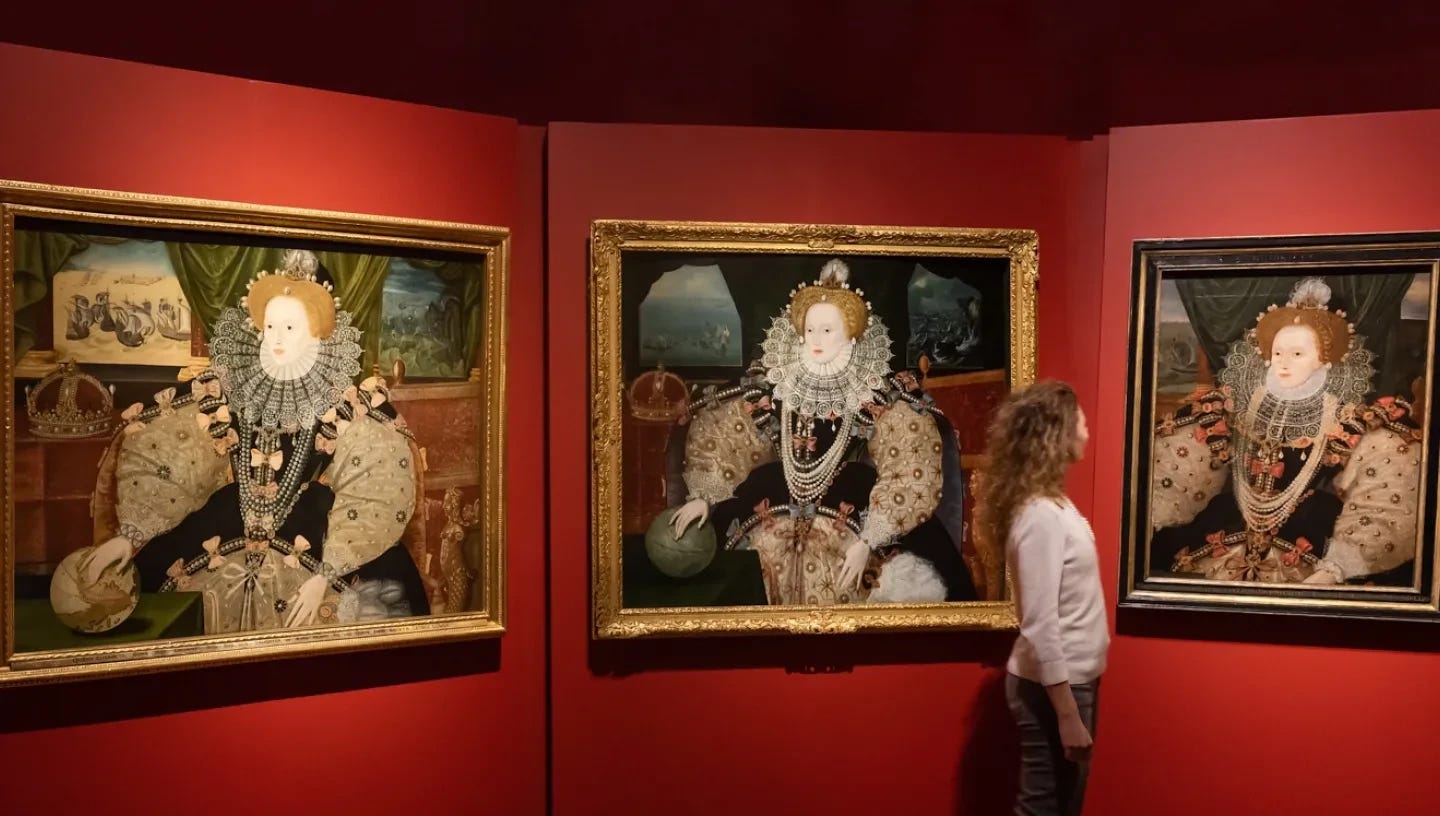
The Photographic Shift: Likeness as Evidence
Photography disrupted this model. Early images were staged and manipulated, but culturally photography signaled a shift toward perceived truth. Likeness seemed to be captured rather than constructed, functioning as a mechanical witness rather than an interpretive one. As images became easier to reproduce and distribute, individuals began asserting claims over their own representation, giving rise to the modern right of publicity. At the same time, photography made likeness legible to institutions at scale. Faces became embedded in passports, policing, and surveillance. The royal era concentrated control among the powerful, while the photographic era expanded access but recast likeness as evidence, shifting control toward institutions rather than individuals.
The AI Era: Likeness as Generation
AI introduces a shift that challenges both older models. AI-generated images are neither constructed nor captured. They are generated: outputs of statistical models trained on vast corpora of prior images. If painting prescribed likeness and photography recorded it, AI synthesizes it. A face is no longer just an image but a set of parameters that can be rendered across endless contexts. Likeness becomes programmable. Whoever controls the model controls how an identity is instantiated at scale.
The Infrastructure Gap
The intensity of today’s debate reflects not just a policy failure but an infrastructure gap. The right of publicity assumes discrete uses of identifiable images. Platform policies treat identity as content to be moderated. Copyright protects expression, not the person whose likeness is used as an input. None of these frameworks were designed for generation: a likeness that was never photographed, never explicitly licensed, yet remains recognizably yours. Enforcement also breaks down entirely. Even where misuse is detectable, it is rarely preventable.
Towards the Programmable Face
If likeness is becoming programmable, control over likeness must become programmable too. That requires infrastructure that operates at the same level of abstraction as the technology itself: systems where individuals can define a canonical version of their likeness, attach permissions for how it is used, and participate in the value it generates. This is what we are building with Mirror Mirror AI. We are not focused on passive protection or reactive enforcement, but on active, programmable control at the individual level.
If the past was defined by centralized control and the present by a fragmented loss of it, the next phase will be defined by programmable control through systems that scale with generative technology instead of lagging behind it. The defining question is no longer whether a likeness can be created.
It is who defines it and who captures the value when it is.